A new initiative for undergraduate research in Antarctica was begun in 1996 with the establishment of an REU site at Hamilton College. Although undergraduate participation in Antarctic field work and researchhas been conducted for a number of years there was no formal organization of undergraduate participation outside of those institutions that normally comduct Antarctic science. The purpose of this program was to allow undergraduate students from institutions across the country to become involved in Antarctic scientific work abord USAP vessels
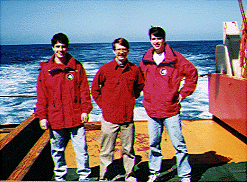 The program began with national advertisement in EOS and a mailing to all geology departments in the country. Approximately, 100 letters of interest were entertained and of these, about 50 resulted in applications for participation. Students were selected based upon letters of support, academic standing, and willingness of a home institution sponsor to co-ordinate the student research. Students were matched with Principle Investigators (PIs) from those programs that were awarded OPP-NSF grants to work on USAP vessles. Available space, research needs, and student background were all important considerations in selecting students. Six students were selected for the '95-'96 field season and two students were selected for the '96-'97 season.
All students participated in a week-long seminar at Hamilton College that was taught with the help of Mr. Matt Kirby (a past REU participant and now teaching science at Canisius High School, Buffalo, NY), Dr. Scott Ishman (USGS, VA), and Ms. Stephanie Shipp (Rice University, TX). During the seminar REU students were given a chance to learn about the Antarctic region through discussions and exercises on geography, oceanography, marine geology, glaciology, meteorology, and paleoclimate. This program followed the outline of a similar course that has been offered at Hamilton College since 1987. Logistical information was also reviewed at this time and students were given some preliminary information on their cruise objectives, methodologies, and expected ship-board behavior.
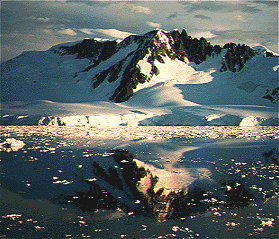 Cruises took place aboard the R/V Polar Duke and RV/IB NB Palmer across regions that varied from the Bransfield Strait to the Ross Sea. Post-cruise research took place at home institutions and involved data collecting during the cruise or previously collected marine geologic data. Projects included multibeam imaging of seamounts in the amundsen Sea to paleoclimate records in glacial marine sediments of the Antarctic Peninsula. Early indications are that the program was a great succes due in large part to the co-operation between PI, home sponsors and the support staff at ASA.
This program was supported via grant OPP94-1853 to Hamilton College. We acknowledge the support of the PIs (Drs. Steve Cande, Lou Bartek, Larry Lawver, Dave Karl, and R. Dunbar) and home institution sponsors, Drs. Patricia Manley, William Mode, Suzanne O'Connell, and Cobabe.

 Created by:
Jonathan Marcel
Last Modified: 12/5/96